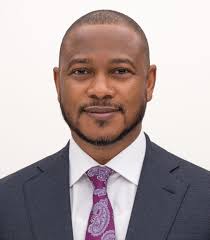
Comrade Obafemi Oyenubi takes over NUAAE Secretariat in Abuja,… Appeals to aggrieved members for Roundtable Discussion

By Florence Nwafor

There was jubilation among Agric workers as One of the popular Labour Leaders and President of Nigeria Union of Agriculture and Allied Employees (NUAAE), Comrade Obafemi Oyenubi as has taken over the Secretariat of the Organization on Monday.

Recall that Comrade Oyenubi was elected National President of NUAAE among other executives at the end of the union’s Extra Ordinary Delegates Conference held in March, 2024 in Abuja.

The members of NUAAE were seen chanting solidarity songs accompanied by law enforcement security into their National Headquarters in Gwagwalada one of the six Local Councils in the Federal Capital Territory (FCT), Abuja.

Speaking to a team of Journalists, Cmr. Oyenubi said “We are glad that the lingering crisis in the union over a decade has been resolved by the law enforcing agencies.

” This is our national Secretariat and we are operating an open office for every member of our union to come to roundabout discussion on plans to move the union towards achieving greater height.

” We are appealing to our Aggrieved members to embrace peace as we are ready to accommodate them into the fold because we are one therefore must work to support President Ahmed Tinubu’s Renewed Hope Administration to enhance productivity in the Agricultural Sector.

Cmr. Oyenubi emphasized that he has constituted a stakeholder committee to reconcile the Aggrieved factions of the union and given a one month period to settle their grievances.

On his part, the Vice President of NUAAE, Comrade Anedi Ekpo said ” towing the line of Mr. President I want to say that this is a public office for all members therefore no need locking the gate for other genuine members.

” As responsible Union that caters for her members we’ll continue to engage them using the ambit of the law to see that we move forward.

Also Speaking, the General Secretary of NUAAE, Comrade Paul Chapi summoned that the rule of law has come to be today and they’re witnessing a fresh atmosphere in the activities of the union.

He said ” the rule of law has come to stay and this is what has been guiding us for the past 12years and we’ll ensure that all Secretariat Staff operates within the framework of the law.

Exchange Rate Scam Version II: Unmasking The New Wave Of Corruption

By; AMBASSADOR ALIYU BIN ABBAS

In a sinister twist reminiscent of past financial malfeasance, the Nigerian government finds itself embroiled in another exchange rate manipulation scandal, dubbed “Exchange Rate Scam Version II.” This latest scheme exposes a sophisticated network within the corridors of power, exploiting the black market to engineer illicit gains while plunging ordinary Nigerians into deeper economic despair.

A Devious Plot Unveiled

The Exchange Rate Scam Version II operates through a cunning strategy: key figures in the Nigerian government, leveraging their influence and insider knowledge, hoard vast amounts of U.S. dollars. These officials then manipulate the black market by strategically releasing and buying back dollars, artificially inflating and deflating the exchange rate at will. By doing so, they execute trades that yield substantial profits, exploiting the lack of proper regulation and oversight in the black market.

A Perfect Crime

Unlike previous scams where government cronies were handed dollars through the Central Bank of Nigeria (CBN) at official rates—only to sell them on the black market for immediate profit—this new version is more insidious. The clandestine nature of black market transactions allows these corrupt officials to operate under the radar, making it difficult to trace and prove their illicit activities. The black market’s opacity provides the perfect cover for these manipulations, facilitating what is essentially the perfect crime.

Economic Misery for Ordinary Nigerians

The ramifications of this scheme are devastating for the Nigerian populace. The manipulated exchange rates have led to the skyrocketing prices of food, goods, and services, exacerbating the already dire economic conditions faced by many. The cost of imported goods, which form a significant portion of Nigeria’s consumption, has soared, putting essential items out of reach for the average citizen.

The ripple effects are widespread: farmers struggle with the inflated cost of imported agricultural inputs, businesses grapple with increased operational costs, and consumers are hit with higher prices for basic necessities. The resulting economic instability undermines public confidence and fuels social unrest, creating a vicious cycle of hardship and discontent.

The Human Toll

For many Nigerians, the impact of these manipulations is not just an economic statistic but a harsh reality that affects their daily lives. Families find it increasingly difficult to afford basic food items as prices for staples such as rice, bread, and cooking oil surge. Educational expenses have also ballooned, making it challenging for parents to provide quality education for their children. Healthcare costs have risen as well, putting essential medical services out of reach for many.

Small business owners, already grappling with a difficult economic environment, face heightened challenges. The increased costs of goods and services reduce their profit margins, leading to business closures and job losses. This, in turn, exacerbates unemployment and contributes to rising poverty levels across the country.

A Call for Accountability

The Nigerian government must address this growing scandal with urgency and transparency. There is an immediate need for stringent measures to regulate and monitor the exchange market, ensuring that those responsible for manipulating rates are held accountable. Strengthening financial oversight and enhancing the transparency of foreign exchange transactions are critical steps towards restoring economic stability and public trust.

Experts advocate for the implementation of a robust monitoring framework that includes independent audits and real-time surveillance of foreign exchange transactions. Additionally, legal reforms are necessary to close loopholes that allow such corrupt practices to thrive. International cooperation and assistance may also play a role in tracking and curbing these illicit activities.

Political Implications

The Exchange Rate Scam Version II has significant political ramifications as well. As public outrage grows, political leaders and parties must navigate the complex terrain of public opinion and voter dissatisfaction. The scandal has the potential to influence upcoming elections, with opposition parties likely to use it as a rallying point against the current administration.

Moreover, the international community is watching closely. Nigeria’s reputation on the global stage is at stake, and the government must demonstrate a commitment to fighting corruption and fostering economic stability. Failing to address these issues could lead to reduced foreign investment and strained diplomatic relations.

Conclusion

Exchange Rate Scam Version II is a stark reminder of the lengths to which corruption can go, exploiting systemic weaknesses for personal gain at the expense of the nation. As ordinary Nigerians bear the brunt of these manipulations, it is imperative for the government to act decisively. Rooting out corruption and implementing robust economic safeguards will be essential in safeguarding Nigeria’s future and ensuring that the interests of its people are protected.

In the face of such challenges, vigilance and accountability are the watchwords for a nation striving to overcome the dark shadow of corruption and build a more equitable and prosperous society. The path forward may be fraught with difficulties, but with collective resolve and transparent governance, Nigeria can emerge stronger and more resilient.

Ambassador Aliyu Bin Abbas is the Youth President, National Youth Alliance

“Youth Group Urges Calm, Rejects Protest Against INEC”

Apex Igbo socio-cultural organisation, Ohanaeze Ndigbo Youth Council Worldwide has distanced itself from a planned protest against the Independent National Electoral Commission, INEC, and its chairman, Prof Yakubu Mahmood. This is also as the Igbo group urged the Labour Party, LP, presidential candidate during the 2023 election, Mr Peter Obi to accept the outcome of the polls and move on.

A group, South Unity Youth Coalition, had announced a mass protest on June 12, Democracy Day, to demand the removal of Professor Mahmoud Yakubu as the Chairman of the Independent National Electoral Commission (INEC).

The coalition believes that Professor Yakubu’s leadership has severely compromised the credibility of Nigeria’s electoral process.

On his part, Obi had on Saturday while reacting to South-Africa’s presidential election, said the last general election was plagued with fraud and widespread irregularities.

However, in a statement by Mazi Okwu Nnabuike, the National President of Ohanaeze Ndigbo Youth Council Worldwide, he said it was regrettable that over one year after the 2023 general elections, many politicians in the country had refused to move on.

Okwu said one would have expected politicians to at this point join hands with the President Bola Ahmed Tinubu government to move the country forward.

He expressed concern that, “instead, what we have continued to see is that politicians and some of their paid agents have continued to fan embers of discord in the country owing to the outcome of the elections.

“We have said for the umpteenth time that there is no perfect election anywhere in the world.

“Our appeal to our brother, His Excellency Mr Peter Obi is to accept not just the outcome of the election, but the verdict of the apex court in the land, the Supreme Court.

“In the case of the 2023 election, without sounding biased, it is a wrong conclusion for anyone to say that the INEC performed woefully. This cannot be so, when the court upheld the majority of the election and in some of the cases where elections were annulled, it had to do with candidates’ qualifications and some other issues that could not be blamed on the INEC.”

Okwu called on those planning any kind of protest to drop the idea, stressing that “Igbo youths are not going to be lured into such a selfish agenda aimed at heating up the polity.

“Rather, we remain firmly behind President Bola Tinubu’s government and INEC. We welcome further reforms to the electoral process through the National Assembly.

“However, any form of protest, we are not going to be a party to it and those behind the plot should jettison it.”

AYCF Warns Against Disruptive Protests on Democracy Day, Advocates for Peaceful Celebrations

The Arewa Youth Consultative Forum (AYCF) is gravely concerned about recent reports of plans by certain groups to disrupt the June 12 Democracy Day celebrations by instigating chaos and violence. AYCF in a statement by its President General Yerima Shettima, strongly condemned any form of protest or demonstration intended to disrupt the peace and stability of Nigeria, particularly on the June 12 Democracy Day when the nation commemorates its hard-fought struggle for freedom and democracy.

“The AYCF believes that any disturbance could undermine the significance of this symbolic day and strongly condemns any form of protest or demonstration that seeks to disrupt the peace and stability of our country, especially on a day as significant as Democracy Day. As a youth organization committed to the advancement and unity of our nation, we believe that peaceful dialogue and constructive engagement are the most effective tools for driving positive change and progress,” said Shettima.

While acknowledging the legitimacy of peaceful protests as a form of expression, Shettima warned that when such activities escalate into violence, it undermines the very principles of democracy that is being celebrated. “Though protest and demonstration are legitimate, when these activities escalate into violence, destruction of property, and endangering of lives, they no longer serve their intended purpose and instead it undermines the very democracy we seek to uphold,” Shettima noted.

Addressing the importance of Democracy Day, Shettima emphasized, “On a day like Democracy Day, when we commemorate the hard-fought struggle for freedom and democracy in our country, it is particularly important to uphold the values of peace, unity, and progress. Disrupting the peace and stability of our nation on such a significant day only detracts from the achievements and sacrifices of those who fought for our democracy.”

Shettima called on all Nigerians to use this day for reflection, gratitude, and solidarity. “Celebrating our Democracy Day should be a time for reflection, gratitude, and solidarity as we honor the sacrifices made by our forefathers to secure our freedom. It is a day when we should come together as one nation, setting aside our differences and focusing on the progress and development of our country,” he said.

To ensure that the day’s celebrations proceed without incident, Shettima urged the government to take decisive action. “Maintaining law and order is crucial not only for the safety and security of the citizens but also for upholding the principles of democracy. The government has a responsibility to protect its people and ensure that they can exercise their rights and freedoms without fear of intimidation or violence.”

He further stated, “Any attempts to disrupt the peace and stability of the Democracy Day celebrations must be met with swift and severe consequences. Those who seek to sow chaos and disorder should be held accountable for their actions and face the full force of the law.”

In addition to punitive measures for potential troublemakers, Shettima advocated for increased security. “Increased security measures, including the deployment of law enforcement personnel and the implementation of crowd control measures, should be put in place to deter any potential threats to public safety.”

Shettima concluded with a call to action for the youth and all citizens: “We urge all citizens, especially the youth, to engage in peaceful and constructive means of advocacy and dialogue to address their grievances and push for the change they desire. Let us work together to build a better and more inclusive society, where the rights and aspirations of all citizens are respected and protected.”

Don’t Accept Less Than N250k Minimum Wage From Tinubu, Frank Tells Labour Unions

*Says what is good for judicial office holders is good for Nigerian workers

Former Deputy National Publicity Secretary of the All Progressives Congress (APC), Comrade Timi Frank, on Friday, called on the leadership of the Nigeria Labour Congress and Trade Union Congress to reject any minimum wage offer from the federal government that is less than N250,000.00 per month.

Frank who was reacting to reports of alleged Federal Government’s offer of N105,000.00 to workers as new minimum wage during their ongoing tripartite negotiation, said: “any amount below N250,000.00 cannot be considered a decent wage for Nigerian workers considering the present socio-economic hardship in the country.”

In a statement in Abuja, Frank accused the President Bola Ahmed Tinubu-led administration of double standards in the fixing of salaries, saying what is good for judicial office holders is good for Nigerian workers.

According to the Bayelsa-born political activist, Tinubu recently sent a Bill to the National Assembly in which he proposed 300 per cent increase in the salaries and allowances of Supreme Court Justices, Appeal Court Justices, President of the National Industrial Court, Judges of the Federal and State High Courts as well as Grand Khadi of State Sharia Courts, among others, in the country.

He noted that the Bill has been hurriedly passed as proposed by the President in both chambers of the National Assembly and now awaiting the assent of the President to become enforceable law.

Frank who is the United Liberation Movement for West Papua (ULMWP) Ambassador to East Africa and the Middle East, said: “How can you increase the salary of an arm of government that is already earning a humongous salary by 300 per cent and add peanuts to the paltry N30,000 that workers have been compelled to live with in this country as minimum wage in the last five years?

“Why did the President send an Executive Bill to the National Assembly to effect a 300 per cent upward review in the salaries of Judicial Office Holders but set up a tripartite committee to negotiate a “starvation wage” (apologies to NLC President Joe Ajaero) for suffering Nigerian workers instead of a “living wage” he promised them on assumption of office in May last year?”

He said that the executive, legislative and judicial arms of government ought to reduce their salaries and allowances to accommodate Nigerian workers who can barely have one meal a day rather than increasing their take home which is already over bloated and economically, financially and socially suffocate workers.

He however declared that “Nigerians are no fools as they know that the proposed generous increase in the salaries of Judicial Office Holders is meant to pay them for the devious work they did to judicially ratify the stay of key political office holders in this administration in office including President Tinubu, Senate President Godswill Akpabio, among others, and to compromise them ahead of any judicial challenge in future polls.”

He reiterated that workers are the engine room of the nation’s economy and that paying them a living wage will boost their morale to work diligently and even pay the supreme price in line of duty for the country’s development if need be.

He therefore urged the leadership of organized labour to be resolute in their demand to ensure that workers get a deserved living wage at this time in the nation’s developmental journey.

He urged them to leave their foot prints on the sands of time by being non-compromising but warned that doing otherwise will inscribe their names in the hall of shame.

Zamfara’s N8,000 Minimum Wage Ignored by PDP, Says NAN

The Northern Awareness Network (NAN) has dismissed the advice of the Peoples Democratic Party (PDP) to the organized labour not to settle for anything less than N120,000 as a minimum wage while ignoring Zamfara state which still pays N8,000 as minimum wage.

NAN described the PDP’s recommendation as discredited, contradictory, and complicated. Additionally, NAN has raised concerns about Zamfara state continuing to pay only N8,000 as the minimum wage, emphasizing the need for fair and equal wages across all regions.

Salihu Suleiman, Chairman of NAN, noted in his statement, “It is unfortunate and ridiculous that in the midst of the ongoing agitation for a new minimum wage by the Nigeria Labour Congress (NLC), the PDP would come up with such a blatant one-sided suggestion.”

Suleiman further highlighted that the advice raises critical questions about the PDP’s credibility and moral high ground, particularly given the current situation of primary school teachers in Zamfara, a state controlled by the PDP. “This advice, while apparently ill-intentioned, raises questions of credibility and moral high ground, especially when considering the situation of primary school teachers in Zamfara, a PDP-controlled state,” Suleiman said.

NAN expressed deep concern over the alarming disparity in wages, pointing out that primary school teachers in Zamfara are still receiving a mere N8,000 as a minimum wage long after the national minimum wage was raised to N30,000.

“The glaring disparity between the recommended minimum wage by the PDP and the actual wage being paid to workers in their own state raises serious concerns about the party’s commitment to the welfare of the working class,” Suleiman added.

Suleiman accused the PDP of using minimum wage advocacy as a tool for political point-scoring against the ruling APC government, which has proposed a minimum wage of N60,000.

“The PDP’s urging for a higher minimum wage across the country, while turning a blind eye to the suffering of primary school teachers in Zamfara, is hypocritical and self-serving. It is evident that their advice to the NLC is more about political point-scoring against the ruling APC government, which has proposed a minimum wage of N60,000.

This political posturing overlooks the real struggles faced by workers on the ground.”
Furthermore, the refusal of Governor Dauda Lawal of Zamfara State to implement the current N30,000 national minimum wage for primary school teachers is seen by NAN as not only unjust but also a blatant disregard for the welfare of these essential workers.

“Despite the efforts of the NLC to persuade Governor Lawal to review the salaries of teachers, their pleas have fallen on deaf ears. This indifference to the plight of workers highlights the disconnect between Governor Lawal’s political rhetoric and practical action on the ground,” Suleiman stated.

NAN called for a more conscientious and action-oriented approach from political parties. “In light of this situation, it is imperative for political parties like the PDP to address the discrepancies within their own territories before offering lofty advice to the rest of the country.

The welfare of workers should be a priority for all parties, regardless of political affiliations. It is time for the PDP to show genuine concern for the working class by taking concrete steps to ensure fair wages and working conditions in states under their control,” Suleiman urged.

The issue of minimum wage in Nigeria is intricate and requires thoughtful, compassionate solutions. “Political parties must demonstrate their commitment to the well-being of workers by advocating for fair wages and holding accountable those who fail to uphold these standards.

The plight of primary school teachers in Zamfara is a stark reminder of the urgent need for action and solidarity in the fight for economic justice,” Suleiman concluded.

Matawalle – A game-changer in addressing urgent security issues in Nigeria

By Suleiman Abbah

In recent years, Nigeria has faced a growing challenge of insecurity, particularly in the northwestern region of the country. The rise of banditry and other security threats has left many citizens living in fear and uncertainty.
At the risk of overstating the case, one can unhesitatingly assert that the situation in the North is one of the most serious social and security challenges facing Nigeria today. The fact that the problem is insidious and not readily apparent is the more reason why it should be seen as an existential matter that needs to be addressed and tackled robustly and defeated once for all. No nation can aspire to greatness or seek to remain secure and safe when its youth and the productive segments of society are left wasted at the mercy of murderous criminals.

National challenges such as the one we are faced with should not be treated with levity and condescension. Neither should they be seen as affecting only one region or state or, for that matter, one ethnic group or the other. On the contrary, such challenges are cross-national issues that affect every one of us regardless of where we live or come from. For this reason, the security problem must be confronted collectively with the entire will and resolve of the nation behind the effort. Failure to do so will indubitably mean that every effort made in isolation will defeat all endeavours, and render the task the more difficult and futile.
Every one must therefore, become a stakeholder and a committed actor in this struggle to free our society and our country of this hazardous and debilitating problem. The young and old, men and women, leaders and the led, politicians and civil servants, businessmen and women, teachers and students, and people from all walks of life must get involved in this struggle to eradicate this menace from the midst of our society.

It was in recognition of the enormity of the challenge before the north and the country in general, and the urgency of the situation, that Bello Matawalle, the former Governor of Zamfara state and current Minister of State for Defence, emerged as a beacon of hope, offering a different approach to addressing these issues that has yielded significant results.

Matawalle has long been a proponent of dialogue and reconciliation as the most effective means of addressing security challenges, particularly the menace of banditry. During his tenure as Governor of Zamfara state, he implemented a strategy of engaging in dialogue with bandits, which led to a significant reduction in violence and a year of zero incidence of bandit attacks in the state. This approach not only helped to bring about peace and stability in the region but also fostered a sense of coexistence among different communities.

In his current role as Minister of State for Defence, Matawalle has continued to champion dialogue and collaboration as key tools in the fight against insecurity. He has embarked on comprehensive stakeholder engagement and consultations with key national and regional leaders to seek their input on how to best tackle the escalating security challenges facing the country. His recent meeting with former Head of State, Abdussalami Abubakar, underscores his commitment to seeking out practical solutions to the issue of insecurity.

Before the current leadership of the Defence Ministry came up virtually the entire North was a battlefront, and the nation was a hostage of Boko Haram and assorted criminal gangs. Today the Ministry’ effort has provided a vastly-improved security atmosphere, with Boko Haram, kidnappers and bandits pinned to enclaves.

Matawalle’s effort represents an initiative by a leader with a major role to play in rescuing Nigeria from the margins of irrelevance, impotence, consequences and decay in the context of the global order which currently runs on the basis of values and practices that Nigeria needs to understand, adapt to or create alternatives that suit its cultures, circumstances and interests.

This Matawalle initiative represents a major step up in the activities of the President Bola Ahmed Tinubu’s administration as part of the mobilization strategies to involve every significant component of Northern society to make the federal government presence felt among the nation’s intelligentsia, community leaders, students in higher institutions as well as the business community and bring them into the mainstream of the “Renewed Hope Agenda activities.

Matawalle recognizes that addressing insecurity requires a collective effort from all stakeholders, including political leaders, traditional institutions, and security heads. In a recent statement, he emphasized the importance of unity and collaboration in finding lasting solutions to the security crisis. By prioritizing peacebuilding and conflict resolution over purely military intervention, Matawalle has shown that sustainable peace and stability can only be achieved through dialogue and consensus-building.

His dedication to finding peaceful solutions to security challenges serves as an inspiration to other leaders across the country who are grappling with similar issues. Matawalle’s example highlights the importance of seeking non-violent means of resolving conflicts and underscores the power of dialogue and reconciliation in achieving lasting peace. As Nigeria continues to navigate the complex landscape of insecurity, Matawalle’s commitment to peaceful solutions should serve as a guiding light, showing that it is indeed possible to achieve peace and stability through dialogue and collaboration.

This, without doubt, is a commendable step, because if the Nigeria today needs to hear the truth, it should be told that before the coming of Tinubu and his defence team, previous Nigerian leaders had lost the energy and some of the courage to take up those issues that were once the major focus of its leaders and its community.

Nigerians must therefore commend the successes of its gallant troops and the strong will of President Tinubu in the fight against insecurity. We must applaud the new spirit of cooperation among our regional neighbors, and appreciate the support of our friends across the world who are assisting us in this fight.

We urge the government and security forces to fight this insurgency with resolve and awareness of their obligations under the law, as well as the knowledge that victory will only be pronounced when the nation achieves full cessation of hostilities, disarmament, demobilization and reintegration in the entire region.

CSOs Pulls Out of Tomorrow’s NLC,TUC Nationwide Strike

Say Strike will cause more economic hardship

As the Nigeria Labour Congress (NLC) and Trade Union Congress (TUC) embark on a nationwide strike over inability of the tripartite committee to agree on the new minimum wage and hike in electricity tariff commences tomorrow, a Coalition of Civil Society Organisations have decided to pulled out of the strike .

The Coalition of Civil Society Organisations said the decision to pull out was taken out of considerations that the current economic situation and untold hardship facing Nigerians, as any nation strike now might degenerate into anarchy and make things worse.

The Nigeria Labour unions on Friday declared an indefinite nationwide strike, starting on Monday, June 3, 2024, due to the Federal Government’s refusal to increase the proposed minimum wage above N60,000.

But the CSOs in the press State statement gave reasons the labour unions should consider what the Federal uad offered on grounds that : ” A few percentage in Nigeria are the only one that are working and accept what the federal has offered.

In the press statement jointly signed by the National Coordinator and Secretary Dr. Mansir Jaafar Ndagi and Mr.Biodun Dele, the Coalition of CSOs cautioned the labour unions against should not jacking up minimum wage to the rate that the state governments will not be able to afford the pay.

“The fear arising from another rate of inflation should be matter for condition, should labour added money beyond the reasonable level.

” We are urging Federal government to increase the numbers of people that are giving conditional cash transfer,who are not in the working category'”. it added .

Meanwhile ,the CSOs urged President Bola Ahmed Tinubu to intervene Toda to avert the indefinite strike action scheduled to start on Monday.

It however, appealed to the labour unions to shelve strike action immediately and go back to negotiating table to continue to discuss with FG with a mind set that majority of Nigerians are not civil servants.

One Year Of Doing Things Differently: The Peter Mbah Story

Prof Chris Mustapha Nwaokobia Jnr.
Convener COUNTRYFIRST MOVT, Policy Analyst, Leadership Trainer has hailed the performance of Enugu state governor, His Excellency Mr Peter Mbah.

Nwaokobia in a press statement said Mbah arguably comes across as the Governor with the best scorecard in 365 days. Ndi Enugu can attest to this truism. The Enugu space today tells lucid testimonies of the place of commitment, dedication, capacity and competency in transformational leadership. And such is the remarkable Story of Peter Mbah.

“I had a near 30 minutes private dialogue with His EXCELLENCY Peter Ndubuisi Mbah three days after he was sworn in as the Executive Governor of Enugu State in 2023. Interestingly I have elected to pen this Tribute in Profound Leadership in his honour exactly one year after that incisive dialogue.”

“The caption of this Press Statement cum Tribute in exemplary leadership came as he responded to my advise that he must endeavour to leave his footprints on the sand of time now that his vision and ambition to govern Enugu State has become a reality. To my advise, Peter Mbah retorted, Prof it is not just about footprints on the sand of time, I shall do things differently, he assured me.”

“One year after, even the staunchest critic of Peter Mbah agrees indeed that things are being done differently. To Governor Peter Mbah democracy is nothing without the people. Conscious of this time tested praxis he set out to work with utmost alacrity knowing that without profound service to the people, democracy loses its defining ethos.”

“Barely one hour after he was sworn in as Governor on the 29th of May, 2023 he signed three Executive Orders.”

“The Orders were in regard to the Citizens’ Charter, which essentially outlined his commitment to the provision of jobs, as well as quality amenities and services that substantially improve citizens’ living condition; transparent and inclusive governance; and the convening of consultative town hall meetings to present government’s plans and receive citizens’ feedback.”

“That action was beyond symbolisms and was in no way driven by the quest for validation. It boldly reaffirmed his conviction to make the people the summum-bonum of his government’s policies. From the outset, there was absolute clarity about his vision for Enugu State, which could be summed up thus: To make Enugu one of the top three States in Nigeria in terms of Gross Domestic Product and achieve a zero percent rate in the poverty headcount index. This also includes the determination to grow Enugu State’s GDP from $4.4bn to at least $30b in the next four to eight years.”

“And taking that commitment beyond words or mere policy programmatic, Peter Mbah hit the ground running like one possessed by an excellent spirit. In one year the story is different. In one year the strides are lucid. In one year the dance is profound, and in one year there are monuments of reference.”

“On SECURITY. His government realized that nothing poses as much threat to the spirit of enterprise and, indeed, drains life out of a city as does criminality – or any hint of it. That explained why freeing the State from the stranglehold of an illegal sit-at-home order was among the earliest actions he took as Governor.”

“Crime may be an ever-present fixture in the society. Nonetheless, the Peter Mbah administration has shown zero-tolerance for crime in Enugu State. And he continues to demonstrate this through the consistent fight against crime, strengthening the capacity of the Distress Response Squad and providing logistical support to the various security arms in Enugu State. It is noteworthy that in the last 365 days there has been significant drop in crime across Enugu State. And very importantly the Mbah administration has remained proactive and vigilant. This is evident in the setting up of a Security Command Centre which is technology-enabled to offer real-time, round-the-clock surveillance of the major streets and neighbourhoods via CCTV cameras placed at strategic locations. Need I inform you that more than 80% of the Enugu Metropolis is presently covered by CCTV, thanks to the man who has elected to do things differently.”

“Conscious of the fact that the primary reason for which governments exist is the protection of lives and property, the Peter Mbah Administration hastened to establish a Security Trust Fund in furtherance to the determination to keep the State safe and enthrone a sustainable platform to pool resources to fund the security needs of the State. The Trust Fund which has been signed into law helps to foster citizens’ engagement and inspire a renewed sense of civic responsibility.”

“Across all sectors within the past 12 months Gov. Peter Mbah’s commitment to the Citizens’ Charter and the courage to bring that vision to fruition has remained unbroken. The efforts of his Watch are vindicated by the visible turnaround in public infrastructure, and sustained increase in annual IGR. He is not reinventing the wheel, but has certainly created a suitable environment for the wheel to spin faster and unencumbered in a way that meets the urgency of now.”

“On WATER SUPPLY.
When Governor Peter Mbah gave a 180-day timeframe within which Enugu’s water problem would be solved, it wasn’t because he considered it a “low-hanging fruit” that could be easily notched. It was because he knew where the provision of potable water ranked on every resident’s wish list – and how urgently they wanted it to be ticked off.”

“He reckoned that the problem of acute shortage of potable water that Enugu residents had experienced for decades should by no means become a situation that simply has to be endured. The mere fact that an anomaly had persisted for so long is not an excuse for it to be normalized, as it were. That was why daily sights of children standing in long queues, with buckets and cans to buy water from tankers according to him were his most depressing encounters during his campaign for Governor.’

Daily water supply to Enugu municipal was an average of two million litres before the intervention of the present watch. Today, the Peter Mbah administration has upped that paltry figure to 120 million litres of daily water supply. And this was done within the projected timeframe.

The fact is that only about 45 percent of what constitutes Enugu metropolis was reticulated, comprising mostly the older residential neighbourhoods. Much of the outlying – and fairly recent – districts were never connected to the supply grid. The Mbah Administration has successfully delivered water to those areas originally on the distribution line, mostly including neighbourhoods where public water had not run in decades.

A good example is the Enugu Campus of the University of Nigeria (UNEC) my alma mater, where the Deputy Vice-chancellor upon seeing water gushing from the taps for the first time in over a decade was overjoyed. And the excitement for the students remain palpable knowing that the sanitary condition of the hostels has improved with regular water supply. Indeed Mbah is doing things differently.

Coal Camp is another such neighbourhood where the taps had been dry for longer than most residents could recall. So, the excitement was understandably evident. On a general note, the administration has achieved this level of coverage across the Enugu municipal:

· GRA I & II – 80%

· Abakpa – 55%

· Ogui – 80%

· Independence Layout (including parts of Nza Street) – 60%

· Uwani – 85%

· Trans Ekulu – 30%

· New Haven – 85%

· Idaw River – 55%

· Emene – 60%

The public water supply experience in most of these neighbourhoods and their surrounding areas was at best unreliable – and at worst non-existent, such was the case for decades. But according to Governor Peter Mbah once the ongoing replacement of pipes, and water line obstruction in several locations arising from physical planning infraction are resolved, a total coverage of reticulated areas will be seen.

Indeed the vision of ensuring that every home in Enugu State has access to water, and the systemic commitment to pulling this through is one halcyon stride in Peter Mbah’s predilection to doing things differently.

On ROADS. Roads that were, for many years by-words for neglect and municipal dysfunction are manifestly wearing new looks. From the once port-holed and dusty roads of Odudukoko and its environs in Gariki; to the gullies that for years left Trans Ekulu a shell of its once glorious past; from the literally impassable Premier Layout and College Road, in Abakpa; to the many Roads linking the metropolis which were nightmare stretch for motorists and residents, the Administration has increasingly turned the State to a huge construction site for the good of all.

It is evident that there is hardly anyone who hasn’t encountered some major road construction around their locality. It hardly matters where you live; the simultaneous rehabilitation and reconstruction of 71 roads in Enugu urban areas have ensured that virtually every neighbourhood in the city is experiencing an impressive road infrastructure makeover, and such is in tandem with his promise to do things differently.

The rural communities are not left out. The ongoing construction of 40-kilometre Owo-Ubahu-Amankanu-Neke-Ikem Dual Carriageway that will open a new gateway to the North-Central region is indicative of his determination to bring a new lease of life to rural communities.

And the recent acquisition of an asphalt production plant, which has a capacity to produce over 1000-ton eco-friendly asphalt daily defines the unalterable commitment of the Peter Mbah’s administration to fix more roads even beyond his immediate projection.

To Governor Peter Mbah every intervention in the last one year has further reinforced the need to radically retool the socio-economic paradigm to make the hopes and aspirations of Ndi Enugu a Promise fulfilled.

On EDUCATION. The Commitment to doing things differently gave birth to the Smart Green School Initiative, which clearly is His Excellency’s bold response to the shortcomings of the public education system.

The Administration is building Smart Schools in each of the State’s 260 electoral wards. These schools are reflective of the steely resolve of his government to bequeath to children an experiential education that can help them navigate the evolving knowledge-driven world, and imbue them with a skill-set that ensures they can practicalize what they have learnt, and are literally at ease with the tools of tomorrow’s workplace.

Mbah’s Smart School Project is certainly not an abstract dream; its prototype stands out elegantly in Owo as a pointer to what the 259 others will look like on completion in 2025. Construction works are simultaneously ongoing at 135 schools, and the Action Governor has assured Ndi Enugu that contract for the rest is due for award in the second phase.

Each Smart School features an interactive digital whiteboard, an internet system, robotics and artificial intelligence centre, modern ICT centre, two science laboratories, hybrid multimedia library, creative production studio, 25 inclusive classrooms and 700 Android tablets. And through these schools, the government shall be nurturing a silent technological revolution.

Peter Mbah’s administration’s N158.78bn education budget is both the highest per capita in the country, and in regard to the percentage of total budget sum – at 33 percent. It is also higher than UNESCO’s recommended benchmark of 15% – 20% of total annual budget. I can say perhaps it is the highest in the world. It implies for instance that for every 100 Naira spent, 33 Naira goes to the education budget. Think about that, and then the mantra ‘doing things differently’ will make renewed sense.

On HEALTHCARE. His investment in the health sector is no less remarkable. The Government of Enugu State under His Excellency Governor Peter Mbah is building new Type 2 Healthcare facilities across the 260 electoral wards in the State. In the 30 Public Healthcare Centres PHCs currently functional each centre is well-equipped and boasts the requisite manpower, comprising Doctors, Nurses, and other relevant health workers. To curb the notorious practice of workers’ absence in hospitals, there are living quarters with constant and alternative power supply for Doctors and Nurses.

Mbah’s government has also paid due attention to the welfare of healthcare workers, and has ensured that every obligation in relation to allowances as well as agreements are fulfilled. This includes employment of Medical Practitioners, as may be necessary, to bring the doctor-to-patient ratio to acceptable standards. This would be impacted, no less, by the presence of the Enugu State University of Medical and Applied Sciences which received further boost when he signed the bill upgrading the institution to a Teaching Hospital.

Another area of success has been in the digitizing of patients’ records at various healthcare facilities in the State, which has created a seamless access to patients’ health history at state-owned facilities.

Development experts often say that the test of a policy is always evident in its outcome and impact on general wellbeing. This is especially true with what Peter Mbah has done in the health sector where there has been vast reduction in infant and maternal mortality rate in the State.

On REVIVING MORIBUND ASSETS AND RECOVERING STATE’S ASSETS. Few weeks ago the Peter Mbah led government signed a contract for the revamping of the iconic Presidential Hotel, and works have actually begun in that regard. He also performed the groundbreaking for the 345-room International Conference Centre Hotel, Enugu which would be the first 5-Star category hotel in the South East.

The absence of a truly 5-star hotel has long deprived Enugu State the opportunity of tapping into the immense benefits inherent in the expansive service industry such as conferences, meetings and events. This is despite the long illustrious history of the Coal City. But with its completion schedule of 11 months, the hotel, alongside the 5,000-seating capacity International Conference Centre due for opening in a few months, will take his government a step closer to making Enugu the Conferencing Capital of Africa. Indeed both facilities represent key enablers of his target of three million annual tourist visits to Enugu.

It is instructive that Presidential Hotel was built in 1963 with income earned largely from Agriculture, by the premier of the defunct Eastern Region, Dr. Michael Okpara. The same could be said of the several once-thriving but now moribund industries such as Nigergas Company Limited, Niger Steel Limited, Sunrise Flour Mills, etc. which the government is taking steps at reviving.

This commitment earned huge dividends recently with the return of 14 such assets to the government. And the motivation is the common good ditto improving the lives of Ndi Enugu.

On AGRICULTURE. Oil Palm was at the heart of Eastern Region’s agro-based economy. The presence of hectares of Palm Plantations across the region best illustrates this. Two such plantations from that era exist in Enugu State. Unfortunately, they have for years been in the throes of death – to put it mildly. However, with the signing of a N100bn partnership deal with Pragmatic Palms Ltd, a private investor, there is now a clear path to recovery for the moribund United Palm Products Ltd. What more defines the uncanny predilection of Gov. Peter Mbah to do things differently?

His government is scaling up Agricultural production in Enugu State. And he is committed to seeing that no longer will investment in agriculture seem like a mere token gesture – or an afterthought.

Indeed Enugu State is on the verge of an agricultural renaissance, given how his government is steadily creating the inputs that would enable the State to reap abundantly from the potential it offers. For instance, his government has created 100,000 hectares of land in each of Enugu’s three senatorial zones for the cultivation of export-focused cash crops, and building the infrastructure that opens up opportunities in the entire value chain, from storage to processing of agricultural produce.

From this vast tract of arable farmland, the Government has established a land bank through which it can forge partnerships with local or foreign businesses desirous of investing in agriculture. Indeed a few months ago Peter Mbah’s administration sealed a Public-Private Partnership deal with Ugwuanama Farms Limited for the industrial cultivation of cassava, rice, maize, banana, oil palm, yams, and sundry crops at a 15,000-hectare farmland in Isi-Uzo Local Government Area. The investment of the government in agriculture reflects a strong emphasis on value addition and agro-processing, hence the attention devoted to growing the cassava-to-ethanol value chain.

Also, few weeks ago, the government received a delegation from the African Development Bank and the Federal Government through the ministries of finance as well as agriculture and food security. The visit was a preparatory step towards formalizing an investment partnership for Special Agro-Industrial Processing Zone, which, besides boosting the State’s earnings when operational, would create massive job opportunities.

As someone with an economic outlook extensively honed in the private sector, Peter Mbah fully understands the importance of creating a governance framework that enables businesses to flourish. This is at the heart of the “Enugu State is open for business” mantra.

On ELECTRICITY REFORMS. In signing the Enugu State Electricity Bill into law and establishing the Enugu Electricity Regulatory Commission, the Government took concrete steps towards becoming a major player in the power sector. This is critical to its plan for industrial expansion, and the projection of the Enugu State government to attain regular power supply in no distant time, working with the private sector.

Indeed, the ceding of regulatory oversight of the local electricity market to the Enugu State government is a strong validation for the quest to develop a commercially viable electricity market that is both reliable and sustainable. It is especially so, given that Enugu State was the first sub-national conferred with such rights. This development is a precursor to the ultimate goal of attracting investors desirous of setting up power generation plants in Enugu State, a move that will guarantee stable power supply and launch the bid of the State to become an industrial base.

On the JUDICIARY. The Reforms of the Peter Mbah led administration in this sector has yielded many benefits. Much progress has been achieved towards an end-to-end digitalization and automation of court processes. So, it’s only a matter of time before cases are filed virtually. The deliverables of the ongoing project include:

· Establishment and equipping of virtual hearing centres for the State High Court, the Correctional Centre, and the Enugu State Multi-Door Courthouse;

· E-filing for Lawyers;

· Automation and digitalization of Enugu State laws, amongst others.

Sufficient progress has also been made towards attaining Verbatim Reporting for the courts. This would eliminate the strain of longhand recording on Judges, shave off the time lost doing so manually and, ultimately, improve productivity.

Voicing a commitment to create an enabling environment for businesses tend to come easily. The difficulty usually lies in bridging the void between commitment and action. Not so however for the Peter Mbah government.

In the first year of his administration, Peter Mbah has created Specialized Courts to optimize justice delivery. This is crucial because access to justice, ease of enforcing contracts and obtaining documents are critical business enablers and useful indicators for gauging the ease of doing business in any given State.

The Justice reforms of his administration are by no means tailored only towards creating an improved operating environment for businesses. It is all encompassing. Under the Peter Mbah watch, for instance, Small Claims Court with specialized focus covering all matters in which the amount claimed is One Million Naira or less have been created. And this is fully operational. Other categories of Special Courts created include:

· Commercial Court (which deals with Commercial, Contracts, Revenue and Financial matters)

· Probate and Family Court (dealing with Probate, Matrimonial Causes and Family Matters)

· Criminal Court (responsible for Criminal cases involving sentences above 14 years, including life and death sentences)

· Originating Applications.

· Lands (or Real Estate) Court – which handles Land matters.

The goal is creating unimpeded access to justice for all. Also in line with this, over 15 Executive Bills were sent to the House of Assembly and have since been approved, signed and assented to.

TRANSPORTATION. As his government strives to re-position Enugu as a major hub for business, sports, tourism and leisure, giving the city a new lease of life conducive to those lofty dreams has become a compelling necessity. Since the discovery of coal in 1909, Enugu has grown from a modest colonial outpost with a handful of encampments for workers of the various coal mines to the bustling megapolis that it is today. Of course, the population too has grown from 62,000 in 1952 to over four million in just the Enugu metropolis.

So, Enugu metropolis now grapples with overcrowding and the resulting strain on basic amenities and infrastructure. Roads that once sufficed for the prevailing traffic at the time they were built have literally become too small for the sheer volume of traffic, which could be seen in the perennial gridlock experienced across the city.

Across the world, cities’ livability drops if they lack a functional transport system with organized bus terminals that confer dignity on users and enhance seamless commuting – both at intra – and inter-state levels. Through the Central Terminal the Enugu State government is working on Ogbete/Holy Ghost, Gariki, Abakpa and Nsukka, and creating a modern transportation interchange that literally opens up the city and eliminates the enormous manhour that is lost to traffic on a daily basis.

To create a comfortable commute for the public and ensure sanity on the roads, the Peter Mbah government is procuring 150 CNG buses – of which 50 is already on ground – and these according to His Excellency would be deployed across various routes. He is also bringing in over 2,000 taxis in conjunction with a private company desirous of setting up an assembly plant in Enugu.

On WASTE MANAGEMENT. Few things blight cities like heaps of refuse. Across the world, as a matter of fact, waste management is a potent marker of municipal efficiency and government’s responsiveness. For the Peter Mbah led administration, rising population cannot be an excuse for overflowing waste bins anywhere in the State – let alone in the heart of the capital.

The government has matched words with action because to Peter Mbah it has always been about doing things differently, and having the will to fix an evidently broken system that had failed for years. Indeed the administration has carried out an extensive re-organization of Enugu’s Waste Management system, and has paved way for the participation of private companies, which have brought in several waste compactor trucks, in place of open trucks. This has vastly improved efficiency and resulted in a cleaner Enugu State.

But I hear that the Government intends to do more by taking waste management a notch higher, using the tool of technology to explore the possibilities in waste-to-wealth, and waste-to-energy.

On ACTION ON CLIMATE CHANGE. Just like his pledge to ensure a proper waste disposal in Enugu State, his government is committed to enthroning effective remedial actions on climate change. The Mbah led administration is profoundly aware of the catastrophic impact of climate change on economic growth and livelihoods, and recognizes the urgent need for a robust climate policy that will pave the way for a clean energy transition, spark green innovation, enhance climate resilience, and drive sustainable economic growth for the State thus ensuring a brighter, greener future for all.

To this end, His Excellency Governor Peter Mbah has announced that Enugu State is on the verge of securing a remarkable #100m grant from the African Climate Foundation, which will be instrumental in developing a groundbreaking and innovative science-based climate change policy and action plan for the State. This pioneering initiative will be the first of its kind across the 36 States of the Federation, positioning Enugu as a trailblazer in climate action and sustainable development.

The climate policy and action plan will be the roadmap to an exciting array of initiatives, including a major climate education and awareness programme, climate finance mobilization, and a transformative clean cooking programme to protect people from the health risks of open firewood cooking.

Moreover, in furtherance of his government’s commitment to a healthy climate, a grand tree-planting exercise that will rejuvenate the degraded ecosystems, sequester carbon, and beautify Enugu State, setting the stage for a vibrant and sustainable future is according to Mr Peter Mbah in the works.

There are other very Olympic projects that underscores the feat of the man who is committed to doing things differently. Please follow though and see why Peter Mbah is unarguably the watchman with the most elaborate scorecard in 365 days.

The Mbah Administration also envisioned the Enugu New City to be the premier investment destination in Nigeria. The New City sits on a corridor that connects the South-East, South-South and North-Central regions, plus the fact that it is only 15-minutes drive from the Akanu Ibiam International Airport. The Enugu New City signals the birth of a new world of opportunities. This vibrant, integrated metropolis driven by manufacturing, commerce and tourism will boast facilities comparable to the standards in globally-renowned cities, from theme park to industrial park.

To return Enugu to its enviable status as the preferred location for Nollywood movie production, Governor Peter Mbah’s administration has secured a multi-million dollar deal to construct an entertainment and sports park in Enugu, and made substantial investment in rehabilitating the Nnamdi Azikiwe Stadium, numerous tourist sites, and is involved in organizing major events where young up-and-coming artistes happily showcase their talent.

The government has invested much in the darling football Club of Ndi Enugu, Rangers International FC, improving their welfare, and bringing in the right management team. And this reflects in the fact that the club is currently top of the NPFL table.

HUMAN CAPITAL/WORKERS’ WELFARE. The Mbah led administration is implementing an e-governance technology, and digitalization in Enugu State with significant positive impact on both the people and the economy. The key benefits include Increased Accessibility and Convenience. It will also improve Service Delivery, Transparency, and enhanced communication and feedback from the public, this awesome initiative takes full effect according to his Excellency in a few days.

In addition, the government has paid considerable attention to the twin-issues of pensions and gratuities. To the Peter Mbah administration senior citizens deserve their due reward when they retire, having devoted a great percentage of their lives in service to the State. Doing so, according to his government would require some verification exercise to digitalize the process and make the payments seamless, going forward. And for the record the Peter Mbah Administration has in fact, cleared the verified backlog.

The man of the moment and the hour Governor Peter Ndubuisi Mbah knows that the work ahead may be daunting, but his determination to continue to do things differently is unwavering. He enjoins Ndi Enugu to continue to have faith in his administration, and to believe in the journey before them, because democracy is a collective walk.

In his one year anniversary speech, he charged his beloved People, Ndi Enugu to greater commitment stating that by the much the State has achieved in the one year of his watch, and having crossed many watermarks of success, borrowing the words of Chinua Achebe, IT’S MORNING YET ON CREATION DAY! Indeed, tomorrow is here! He noted.

I cannot but proudly associate with the man who is doing things differently, and wish him more fulfilling strides and profoundly remarkable times as the Governor of Enugu State.”

Happy One Anniversary to Your EXCELLENCY Governor Peter Mbah, May Enugu State prosper in resounding ways under your watch.

Why Nigerians Should Support Cyber Security Levy- CSOs

CSOs Give Reasons Nigerians Should Support Cyber Security Levy

Members of Coalition of Civil Society Organisations under aegis of Forum for Good Governance in Nigeria (FGGN) have urged the federal government to reintroduce the Cyber Security Levy considering the advantages of enhancer security framework of financial operations in the country.

According the CSOs ,advantages of the cyber security Levy far outweighs the excuses given for revoking it.

Nigeria’s central bank did withdraw the controversial 0.5% cybersecurity levy on electronic transfers three days before it was supposed to take effect.

The levy was seen as “regressive” by financial industry experts due to the increase in the cost of an electronic transaction amidst the country’s highest inflation rate in thirty years and a cost of living crisis. Following mounting pressure from labour unions, the federal government suspended the levy and said it would be reviewed on Tuesday

The Civil Society Organisations in
a Communique issued after a one-day Review Meeting held at Arewa Auditorium today on with the theme: “Economic implications of Revoking the Cyber Security Levy vis-a-vis the advantages” backed the reintroduction of the Levy,since it’s in line with internationally best practices .

In the communique jointly signed by the National Coordinator and Secretary;Comrade Abraham Douglas and Comrade Bala Galadima Ikara,members of the CSOs across 28 States of Nigeria reviewed the pros and cons and agree that the cyber security levy will enhance the security framework of financial operations.

While insisting that the Cyber Security Levy should be Re-Introduced considering the advantages, the CSOs said there is no alternate to a secured and trustworthy electronic transaction environment which will promote economic growth and digital financial inclusion.

According to the groups, considering the country’s battered image globally, the Levy will help fund the development of a robust cybersecurity infrastructure . Stressing,”Cyber funding has become a veritable means of funding for terrorists and there’s no way to combat terrorism successfully without denying them there sources of funding.

Further explaining reasons for supporting CBN over the Cyber Security Levy is the implementation of advanced security measures; protecting financial institutions and customers from cyber threats and attacks by the so called ,”Yahoo Boys” .Adding that Cyber crimes have destroyed the lives of many young people and must be discouraged.

The communique further reads: “That in Compliance with Global Standards, the levy will help Nigeria align with international best practices in cybersecurity; enhancing the country’s reputation and attract foreign investment, as investors will be assured of a secure environment for their investments.

“Against this background,We have strongly come out to support the Central Bank of Nigeria (CBN) circular and letter to all banks dated June25,2018(Ref:BPS/DlR/GEN/ClR/05/008)October5,2018(Ref:BSD/DIR/GEN/LAB/11/023) respectively on compliance with the Cybercrimes (Prohibition, Prevention, Etc.) Act 2015 refer.

“We did concur in line with the enactment of the Cybercrime (Prohibition, Prevention, etc) (Amendment) Act 2024 and pursuant to the provision of Section 44 (2)(a) of the Act, “a levy of 0.5% (0.005) equivalent to a half per cent of all electronic transactions value by the business specified in the Second Schedule of the Act’, which is to be remitted to the National Cybersecurity Fund (NCF), which shall be administered by the Office of the National Security Adviser (ONSA).

“This because, the implementation of the Levy will no doubt enhance National Security and guarantee strengthening of cybersecurity; protecting critical infrastructure and sensitive information.”