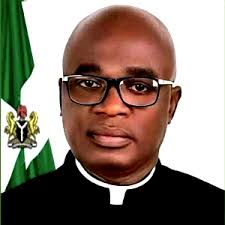
Northern Forum  Celebrate Yakubu’s Elevation to Key Global Role

Bawa Bwala

The Northern Awareness Network (NAN) has commended President Bola Ahmed Tinubu for the nomination of former Chairman of the Independent National Electoral Commission (INEC), Professor Mahmood Yakubu, as Nigeria’s ambassador to an unspecified international mission, describing the development as a boost to the nation’s diplomatic profile.

In a statement issued yesterday in Abuja and signed by its Chairman, Salihu Sulaiman, the group said the nomination was a recognition of Yakubu’s “distinguished record of public service” and his “vast experience in global affairs,” which it argued would be invaluable in strengthening Nigeria’s engagement on the international stage.

Sulaiman noted that the former INEC chairman had earned national and international respect during his stewardship at the electoral body, where he championed reforms aimed at improving electoral transparency and deepening democratic processes.

He dismissed concerns raised in some quarters that Yakubu’s new appointment could compromise the independence of INEC, insisting such fears were “misguided and reckless.”

According to him, the neutrality of INEC is anchored on law, institutional safeguards, and multilayered oversight mechanisms—not on the post-service career of any individual.

“INEC’s integrity is not tied to the personal trajectory of any former official,” Sulaiman said. “It is a system strengthened by reforms since 2010, monitored by political parties, civil society organisations, and the media. Democracy rests on institutions, not personalities.”

The group further highlighted Yakubu’s career under four successive presidents—Umaru Musa Yar’adua, Goodluck Jonathan, Muhammadu Buhari and Bola Ahmed Tinubu—as evidence of his professionalism and non-partisan disposition.

It recalled that as Executive Secretary of the Tertiary Education Trust Fund (TETFUND) between 2007 and 2012, Yakubu initiated reforms that continue to shape the nation’s tertiary education sector. It also pointed to innovations introduced under his leadership during the 2023 general elections, which it said enabled opposition parties to record their highest number of elective positions in the country’s political history.

The Northern Awareness Network urged Nigerians to support the nomination, adding that effective diplomacy required individuals with proven administrative competence and an understanding of Nigeria’s governance architecture.

Sulaiman stressed that rather than question Yakubu’s nomination, Nigerians should focus on strengthening national institutions and reinforcing accountability across all sectors.

“This appointment is an opportunity to present Nigeria’s democratic values to the world with credibility,” he added. “We call on Nigerians to rally behind this development and remain committed to building strong, resilient institutions.”

The statement concluded with the group expressing confidence that Professor Yakubu would bring his “wealth of experience, integrity, and calm leadership” to the diplomatic assignment once confirmed.

ENDS

Tinubu Urged to Halt ‘Smear Campaign’ Targeting Minister Matawalle


By Saul Aboje
 
The Northern Awareness Network (NAN) has called on President Bola Ahmed Tinubu to intervene in what it described as a growing campaign of calumny against the Minister of State for Defence, Mohammad Bello Matawalle, warning that the development could undermine security and political stability in the North.
 
In a statement issued by its chairman, Salihu Sulaiman, the group alleged that following the recent resignation of the Minister of Defence, Mohammed Badaru Abubakar, certain political interests had intensified efforts to discredit Matawalle.
 
NAN claimed that the attacks were part of a wider political strategy purportedly aimed at weakening President Tinubu’s support base in the North ahead of the 2027 elections.
 
According to the organisation, intelligence it gathered suggested that Zamfara State Governor, Dauda Lawal, was linked to activities allegedly intended to stir public unrest and mobilise protests against the minister. The group warned that such actions could heighten tensions in the already fragile security environment in the North-West.
 
“These machinations are clearly designed to destabilise the region and erode the President’s strong support base,” the statement read. “The President must be wary of those seeking to weaken his administration through orchestrated attacks on loyal allies like Matawalle.”
 
The group further drew parallels between current security concerns in Kebbi State and the 2014 abduction of the Chibok schoolgirls in Borno State, warning that any missteps in managing the situation could have far-reaching political consequences.
 
It argued that Minister Matawalle had demonstrated firm commitment to improving security and had earned the trust of many northern communities.
 
“Northern Nigeria stands united in appreciating Matawalle’s efforts. His initiatives have yielded tangible results, and attempts to tarnish his image are distractions from the real issues,” NAN stated.
 
The group urged President Tinubu to reaffirm his confidence in the minister, stressing that sidelining him would amount to a strategic error in the buildup to the next general election.
 
NAN also called for a public denouncement of what it described as “baseless attacks” against the Defence Minister, insisting that Matawalle remained a key pillar in sustaining political cohesion and public confidence in the North.
 
ENDS

Northern Faith Leaders Unite in Abuja, Push Bold Agenda to End Insecurity


The Yari Roundtable for Inter-Religious Harmony has convened a landmark interfaith summit in Abuja, bringing together top Christian and Muslim leaders from across the 19 northern states to develop practical solutions to the deepening insecurity plaguing the region.

The high-level gathering, described by participants as one of the most comprehensive interfaith engagements in recent years, drew influential clerics, community stakeholders, and dignitaries united in their resolve to chart a new and sustainable path to peace.

In his opening remarks, former Senator Shehu Sani said the worsening violence in the North—ranging from terrorism and banditry to kidnapping and violent crime—made the summit both urgent and unavoidable. He noted that the Roundtable aims to listen directly to those closest to the crisis: religious and community leaders whose voices and experiences are essential to understanding the root causes of insecurity.

“This is not the time to remain reactive,” Sani said. “What we are doing today is adopting a bottom-up approach. The North cannot progress under the weight of insecurity. We must confront the truth, address the causes honestly, and find lasting solutions.”

The former lawmaker urged clerics to use their pulpits and places of worship to amplify messages of peace, unity, and tolerance. He praised the “robust and enriching” discussions that had emerged during the meeting, emphasising that the shared contributions of participants revealed the depth of commitment among northern faith leaders.

According to him, the Yari Roundtable for Interreligious Harmony is designed to identify collective strategies for combating terrorism and restoring peace across Nigeria. He stressed that religious cooperation remains indispensable in rebuilding trust and countering extremist ideologies.

Participants unanimously acknowledged that terrorism, banditry, and other forms of violence are a shared threat affecting all communities—regardless of faith or ethnicity—and therefore require a unified response.

Religious leaders at the summit commended Senator Abdul Aziz Yari, former Zamfara State governor and founder of the Roundtable, for initiating what they described as a timely and courageous intervention. They noted that clerics, as influencers of public thought, play a critical role in promoting coexistence, de-escalating tensions, and discouraging radical ideologies within their congregations.

The summit’s deliberations, they said, exposed key drivers of insecurity and produced targeted recommendations that, if implemented by federal, state, and local authorities, could significantly reduce violence across the North.

The clerics urged political leaders, security agencies, and citizens to embrace the resolutions produced at the summit and sustain regular interfaith engagements as a reliable pathway to peace, healing, and development.

Prominent religious leaders in attendance included Archbishop James Mafita, Sheikh Salisu Abdullahi Maibarota, Rev. Gideon Mutum, Dr. Umar Zaria, Dr. Sadiq Doka, Bishop Salisu Bala (JP), Bishop Livingston Achili, Bishop Obadiah Gideon Bako, and Sheikh Adam Binani, among others.

Senator Abdul Aziz Yari established the Yari Roundtable for Interreligious Harmony to foster peace, unity, and mutual understanding across the 19 northern states—offering a platform where Christian and Muslim leaders can jointly address the existential threats facing their communities.

Nigeria Makes Strong Showing at COP30 in Brazil

Nigeria’s participation at the ongoing COP30 in Belēm, Brazil, witnessed a tremendous boost when Dr. Mustapha Abdullahi, Director-General of the Energy Commission of Nigeria (ECN), delivered a keynote address at the High-Level Buildings and Cooling Pavilion Side Event.

The DG ECN used the platform to highlight Nigeria’s commitment to a smarter, energy-efficient cooling transition aligned with global climate goals.

Dr. Mustapha, alongside global partners including Daikin Industries, UNEP-U4E, and the International Energy Agency, explored practical solutions to expand access to cooling while minimizing environmental impact.

At the global event, discussions emphasized the role of Minimum Energy Performance Standards (MEPS) and modern cooling technologies in reducing emissions across emerging economies. Side conversations were also held with staff of the NNPC on how the initiative can be further supported by the Government of Nigeria.

The ECN Director-General, an avowed and committed believer in the country’s solarization project, reaffirmed Nigeria’s readiness to harmonize standards, deepen collaboration, and accelerate sustainable cooling innovations under the Global Cooling Pledge.

He told listeners that “ECN remains focused on advancing technologies and policies that enhance comfort, boost productivity, and protect the environment.”

Similarly, the ECN DG engaged with Prince Abdulaziz bin Salman, Saudi Arabia’s Minister of Energy and Climate Change, to discuss fostering a just and equitable energy transition for developing nations.

Their discussion centered on responsibly harnessing natural resources to accelerate sustainable growth, reflecting a shared commitment to collaboration, innovation, and an energy future that benefits people while protecting the planet.

Dr. Mustapha, at the global event which comes to an end today, joined other distinguished Nigerians at the Nigeria Pavilion to celebrate Nigeria Day at COP30 in Brazil, where he delivered a brief remark.

The delegation included the Minister for Regional Development, Engr. Abubakar Momoh; the Minister of Livestock and Fisheries Development, Alhaji Idi Mukhtar Maiha; and the Chairman of the House Committee on Science and Technology, Hon. Adelegbe Emmanuel Oluwatimehin.

Several other eminent Nigerian representatives were also present, underscoring the nation’s strong commitment to climate action and sustainable development on the global stage.

Alia Under Fire as Middle Belt Forum Says Benue Governor Is ‘Whitewashing Atrocities’ for Political Gain


By Odogwu Andy

The Middle Belt Forum (MBF) has accused Benue State Governor, Rev. Fr. Hyacinth Alia, of attempting to “whitewash” the scale of atrocities committed in the state by armed militias, saying his recent remarks denying religiously targeted genocide amount to a betrayal of the people he governs.

In a statement issued Thursday and signed by its spokesperson, Luka Binniyat, the MBF said Governor Alia’s comments were “deeply irresponsible” and appeared crafted to protect federal authorities from growing international scrutiny. The Forum said the governor’s stance aligns suspiciously with Abuja’s current messaging—one aimed at downplaying the persecution of Christian communities in Nigeria’s Middle Belt.

The MBF noted that Alia’s denial directly contradicts his own viral video from April 20, 2025, where he lamented “well-targeted, well-planned and religiously inspired” attacks ravaging Benue. “A governor who once cried out on behalf of his people is now pretending that the fire consuming them does not exist,” the statement said.

The Forum argued that the consistency and scale of attacks—killings, arson, abductions and mass displacement—fit the UN’s definition of genocide. It cited thousands of deaths recorded between 2015 and 2023, with a spike in massacres across 2024 and 2025, mostly attributed to Fulani Ethnic Militia. Humanitarian agencies have also documented over half a million internally displaced persons across Benue’s camps.

“To dismiss these realities is to erase the suffering of communities who have lost everything,” the Forum said. “It signals to perpetrators that Benue’s leadership no longer stands with its own victims.”

The MBF criticised the governor for invoking his priesthood as justification for his views, calling it “a misuse of the cloth” and insisting that spiritual identity cannot excuse political negligence.

The group issued a four-point demand urging Governor Alia to acknowledge the genocide realities, permit independent investigations, expand humanitarian access and refrain from making statements that “undermine truth and justice.”

“Benue’s wounds are still bleeding,” the Forum concluded. “History will not be kind to those who choose political convenience over the lives of the oppressed.”

Abuja Summit: Amaechi, Shehu Sani Clash Over Tinubu’s Administration

A heated exchange ensued on Monday in Abuja between former Minister of Transportation, Rt. Hon. Chibuike Rotimi Amaechi, and former Kaduna Central Senator, Shehu Sani, during the National Electoral Reforms Summit 2025, as both clashed over the performance of President Bola Ahmed Tinubu’s administration.

Amaechi, in his remarks at the summit organized by the Movement for Electoral Reform, took a swipe at the current administration, describing it as “insensitive to the yearnings of Nigerians.” He lamented the worsening hardship across the country, accusing the government of failing to deliver good governance and protect citizens from economic suffering.

“People are suffering, yet there is no ASUU, no NLC, no NANS to mount pressure on the government. Nigerians are quiet when they should be demanding accountability,” Amaechi said, warning that Tinubu’s government is “defeatable” through democratic means.

However, his comments immediately drew a strong reaction from Senator Sani, who accused Amaechi of hypocrisy, reminding him of his own record in public service.

“You were part of governance from the state to the centre for many years, with little or no remarkable achievement,” Sani fired back. “You are now attacking Nigerians for not protesting, but you yourself never led any protest when you were in power.”

The former lawmaker argued that many of the challenges now blamed on Tinubu’s administration were created by previous leaders — including those who served under both the PDP and APC governments since 1999.

“All that he is pointing out as bad were problems created by leaders like him. It is ironic that after two years out of power, he has suddenly become a critic,” Sani added.

The National Electoral Reforms Summit 2025, held in Abuja, brought together politicians, civil society leaders, and electoral experts to deliberate on strengthening Nigeria’s democratic institutions ahead of future elections.

Other notable participants included Dr. Usman Bugaje, IPAC Chairman Peter Ameh, former SDP presidential candidate Prince Adewole Adebayo, Dr. Yunusa Tanko, Dr. Oby Ezekwesili, and Senator Eyinnaya Abaribe.

The fiery Amaechi–Sani exchange became the highlight of the summit, drawing mixed reactions from attendees who described it as a reflection of the growing ideological and moral divides within Nigeria’s political elites.

URGENT NEED FOR COUNCIL OF STATE: AN OPEN LETTER TO HIS EXCELLENCY, PRESIDENT BOLA AHMED TINUBU, GCFR,THE PRESIDENT AND COMMANDER-IN-CHIEF OF THE ARMED FORCES OF THE FEDERAL REPUBLIC OF NIGERIA


In the wake of the United States’ Allegation of Christian Genocide and the Designation of Nigeria as a “Country of Particular Concern”, Your Excellency, Sir, there is an urgent need to convene Council of State meeting to address the matter.

May peace, wisdom and divine guidance continue to be upon you as you steer the affairs of our great nation at this critical moment in history.

I humbly write this open letter, Your Excellency, not out of disregard for established channels of communication, but out of necessity and duty.

“Convening the Council of State will project confidence to both domestic and international observers – a clear demonstration that Nigeria’s leadership is united, alert and proactive in defending its sovereignty.”

My current position and limited access to the Presidency make it difficult for me to reach you directly. However, the gravity of recent international developments compel me, as a legal practitioner and public servant deeply committed to Nigeria’s sovereignty and unity, to raise this urgent matter through this open medium.


The Urgent Context

Your Excellency, the recent action of the United States Government – designating Nigeria a “country of particular concern” (CPC) over alleged religious persecution, coupled with open statements from some US officials and political figures hinting at possible sanctions and even military intervention – has sent shockwaves through the diplomatic, legal and security corridors of our dear nation.

These allegations of a so-called “Christian Genocide” in Nigeria are extremely grave. Whether rooted in misinformation, incomplete data or misrepresentation of our complex internal security realities, they carry the potential to damage our sovereignty, national image and international standing.


Why the Council of State Needs to Be Convened

The Nigerian Council of State, as established under Section 153 of the Constitution of the Federal Republic of Nigeria, 1999 (as amended), exists precisely to advise the President on matters of national importance. The present crisis undoubtedly falls within this purview.

“A Council session will enable the Federal Government to coordinate a well-grounded diplomatic and legal response to the US designation, including the preparation of a verifiable data on religious freedom, human rights and counterterrorism efforts in Nigeria.”

I most humbly urge Your Excellency to summon an emergency session of the Council of State for the following reasons:


1. To Defend National Sovereignty and Unity

The mention of possible foreign military action constitutes a direct challenge to Nigeria’s sovereignty. Bringing together former Heads of State, serving State Governors, the Chief Justice and other constitutional members will send a powerful message of national unity – that Nigerians, regardless of region, religion or political persuasion, stand together in defence of our territorial integrity and constitutional order.


2. To Formulate a Coherent Diplomatic Response

A Council session will enable the Federal Government to coordinate a well-grounded diplomatic and legal response to the US designation, including the preparation of verifiable data on religious freedom, human rights and counterterrorism efforts in Nigeria.

“By convening the Council of State now, Your Excellency, you will not only reaffirm our democratic institutions but also strengthen your administration’s legacy as a bridge-builder in turbulent times.”

It will also provide an opportunity to design a proactive engagement strategy with Washington, United Nations, ECOWAS and African Union.


3. To Reassess Domestic Security and Humanitarian Realities

While refuting exaggerated claims, we must also seize this opportunity to reassess our internal security operations. The Council can review updated reports from the military, police and intelligence agencies; examine patterns of violence in affected regions and recommend comprehensive measures to prevent further civilian casualties – Christian and Muslim alike.


4. To Reinforce National Cohesion and Prevent Religious Polarization

The allegation of a “Christian Genocide” risks inflaming sectarian tensions within Nigeria. An open, unified communication strategy emanating from the Council of State – representing all regions and faiths – will help dispel fear, correct misinformation and prevent opportunistic elements from exploiting religious sentiments.


5. To Address Legal and International Risks

As a lawyer, I must respectfully emphasize that any talk of foreign military intervention without Nigeria’s consent violates the United Nations Charter and International Law. Nevertheless, the threat alone can have destabilizing diplomatic and economic consequences. The Council of State can thus deliberate on the appropriate legal, diplomatic and political instruments to safeguard Nigeria’s interest under the International Law.


6. Economic and Reputational Considerations

The CPC designation, if left unaddressed, could discourage foreign investment, strain bilateral relations and lead to sanctions that affect development aid and security cooperation. Convening the Council of State will project confidence to both domestic and international observers – a clear demonstration that Nigeria’s leadership is united, alert and proactive in defending its sovereignty.


A Call For Strategic Statesmanship

Your Excellency, Nigeria has weathered many storms – from civil war to insurgency to international pressure – and has always emerged stronger through wise, inclusive and timely leadership.

By convening the Council of State now, you will not only reaffirm our democratic institutions but also strengthen your administration’s legacy as a bridge-builder in turbulent times.


Conclusion

Mr. President, Sir, I trust that you will receive this letter in the spirit of patriotism and constructive counsel in which it is offered. History will remember that at a moment of heightened international tension, the Nigerian President listened to reasoned advice and rallied the nation’s leaders – past and present – to speak with one voice for unity, justice and peace.

May God Almighty continue to guide Your Excellency with wisdom and courage as you lead our nation forward.


Respectfully submitted,
Barrister Aminu Hussaini
Special Adviser to the Executive Governor of Kano State on Justice/Constitutional Matters
Kano, Nigeria
📧 aminuhussaini173@gmail.com

Dated: November 7, 2025

Renewed Hope in Action: ECN Partners LONGi and UNIDACO to Boost Nigeria’s Energy Sector

President Bola Ahmed Tinubu’s Renewed Hope Agenda is the overarching philosophy guiding his administration’s policies, which focus on restoring confidence, attracting investments, and empowering citizens through various initiatives.

“Renewed hope” means a revived or re-established sense of optimism and belief in a positive future, often after a period of difficulty or disappointment. It signifies regaining hope and confidence, whether through personal effort, external programs, or spiritual means, to overcome challenges and strive for a better life.

For Dr. Mustapha Abdullahi, Director General of the Energy Commission of Nigeria (ECN), his devotion and dedication to attracting investments in the energy sector and striving to put the sector on the global map is highly commendable.

As a dedicated believer in the Renewed Hope Agenda and its benefits to Nigerians, he has made remarkable progress in repositioning the energy sector.

Recently, Dr. Mustapha Abdullahi recorded a great feat and landmark achievement as he finalized a partnership between Nigeria and the world’s largest solar panel production company, LONGi, at its headquarters in Xi’an, Shaanxi, China.

Nigeria, through the Energy Commission of Nigeria (ECN), concluded this strategic partnership with LONGi, the world’s leading solar technology manufacturer. The Nigerian delegation, led by Dr. Abdullahi, was received by President Boshen Zhong and Vice President Li Wenxue of LONGi, who took them on a tour of one of the world’s largest solar cell production facilities.

The visit followed the Memorandum of Understanding (MoU) signed between ECN and LONGi in London earlier this year. During the visit, Dr. Abdullahi advanced discussions on establishing a 500–1000 MW solar panel production factory in Nigeria — a move set to significantly boost the nation’s renewable energy capacity.

ECN’s presentation to LONGi highlighted Africa’s growing market and the increasing demand for solar mini-grids. It also emphasized President Bola Ahmed Tinubu’s Renewed Hope Solarisation Policy, which seeks to accelerate access to clean and affordable energy across Nigeria.

LONGi expressed strong interest in investing in Nigeria and demonstrated readiness to advance concrete plans for the construction of the factory. This partnership marks a historic milestone for the Nigerian renewable energy landscape and aligns with national efforts to expand local solar manufacturing capacity.

The ECN, under Dr. Abdullahi’s visionary leadership, is working assiduously to ensure that Nigerians enjoy improved electricity supply. His management team is delivering on the Renewed Hope Initiative of President Bola Ahmed Tinubu’s administration, particularly its policy on solarisation. The Commission looks forward to working closely with LONGi and the Federal Government to realize this transformative initiative, which will create jobs, enhance energy security, and drive sustainable development across the country.

In another positive development and in constant pursuit of delivering the benefits of the Renewed Hope Agenda to Nigerians, the Energy Commission of Nigeria, through its DG Dr. Mustapha Abdullahi, signed a Memorandum of Understanding with UNIDACO Limited, London, for an initial €100 million investment in Nigeria’s energy sector.

Speaking on the development, Dr. Abdullahi stated, “The signing, held at the House of Lords, London, during the Renewed Hope Global Dialogue (UK Edition), marks a major milestone in advancing Nigeria’s clean energy transition.”

According to him, “This partnership underscores our commitment to expanding renewable energy access, driving innovation, and strengthening Nigeria’s capacity to harness clean technologies. Moreover, it aligns with President Bola Ahmed Tinubu’s Renewed Hope Agenda, particularly on sustainable energy solutions as a catalyst for economic growth and development.”

He added that the distinctive MoU was signed in the presence of dignitaries and investors of repute from Nigeria and across the world. “Overall, this milestone reaffirms our resolve to deepen global partnerships that will accelerate Nigeria’s energy transformation. Together, we are charting a new course toward an inclusive, energy-secure, and prosperous nation built on innovation and collaboration,” Dr. Abdullahi concluded.

With ardent adherents of the Renewed Hope Agenda like Dr. Mustapha Abdullahi, Director General of the Energy Commission of Nigeria, the government of President Bola Ahmed Tinubu is truly walking the talk of the Renewed Hope Agenda.

By Our Reporter

Kaduna Spelling Bee Launched to Promote Literacy, Honour Gov Uba Sani

A pioneering Spelling Bee Competition has been launched in Kaduna State to promote literacy and academic excellence among students in honour of Governor Uba Sani.

The initiative, fully sponsored and driven by Barrister Aisha Ahmad Mohammad, Secretary of the Kaduna State Internal Revenue Service (KADIRS), is designed to inspire healthy academic competition and reward excellence across the state’s three zones.

She disclosed that all arrangements for the Zone 1 event have reached an advanced stage. She added that the competition will proceed to Zones 2 and 3, culminating in a State Grand Finale where the overall champion — known as the Gwani — will emerge.

“Each zone will have its own prizes,” she said, “and in addition, there will be the Speaker Abbas Prize, a capital project award to be executed in the best-performing schools in both the Junior and Senior categories.”

“This is about giving our children confidence through knowledge — empowering them to dream big and excel,” Barrister Aisha explained.

She called on all Local Government Chairmen to give their full support and blessings for the success of the programme, describing it as a pioneer effort to rekindle the reading culture and strengthen the foundation of literacy in Kaduna State.

Barrister Aisha further revealed that the semi-final rounds will take place across the Local Government Areas in November, while the Grand Finale will be held in Zaria, Insha Allah, in January.

Although privately sponsored, the initiative aligns with Governor Uba Sani’s broader human capital development agenda, which prioritizes education, youth empowerment, and equal learning opportunities as the pillars of Kaduna State’s sustainable progress.

Senator Shehu Sani Urges Islamic Clerics to Support Governor Uba Sani, Warns Against Political Deceit

Former Kaduna Central lawmaker, Senator Shehu Sani, has cautioned Islamic clerics to be vigilant and wary of the vain promises and deceitful tactics often employed by politicians during election periods.

Speaking during an interactive session with Islamic scholars across the 23 local government areas of Kaduna, Senator Sani urged clerics to resist inducements and political manipulation aimed at winning their support for selfish political interests.

He, however, called on Islamic clerics across Kaduna State to support the re-election bid of Governor Uba Sani, whom he described as a leader committed to good governance and responsive to the needs of the people.

According to the former senator, Governor Uba Sani has demonstrated a high sense of responsibility and dedication to addressing the yearnings of citizens since assuming office nearly two years ago.

Senator Sani further encouraged the clerics to unite in identifying and presenting the major needs of the Muslim community—such as the renovation of mosques, establishment of Islamic schools, and support for orphanages—to the government in a structured and coordinated manner.

He warned religious leaders to beware of political figures who only seek their support during elections and neglect them thereafter.

“The era of deceit and the use-and-dump approach to Islamic clerics is over,” Senator Sani declared.

He appealed to the religious leaders to continue praying for Governor Uba Sani and to support his administration, describing the governor as a listening and visionary leader committed to the development of Kaduna State.

In their brief remarks, several Islamic clerics commended Senator Sani for taking the bold step to convene such a meeting, which they said exposed the deceitful tendencies of some politicians.

They also pledged to use their influence as mobilisers to support credible leaders with proven records of capacity and performance in future elections.