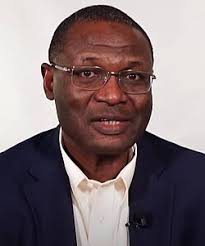
Renewed Hope Agenda: FG Sets Up Committee to Implement National Energy Masterplan


By Mike Odeh James


Abuja

In its committed drive to deliver on the Renewed Hope Initiative of President Bola Ahmed Tinubu’s administration, the Federal Ministry of Science, Technology, and Innovation, in partnership with the Energy Commission of Nigeria (ECN), has successfully inaugurated the National Energy Masterplan Implementation Committee (NEMIC).

The inauguration of the members of the committee took place during a high-level ceremony held at the Minister’s Conference Room, with the Chairman/National Coordinator, Co-Chairman, and Members in attendance.

The event, which marked a historic milestone in Nigeria’s energy sector reform efforts, underscored the Federal Government’s determination to deliver a coordinated and sustainable energy transition under the Renewed Hope Agenda.

Others in attendance included senior government officials, development partners, representatives of the private sector, civil society organizations, and international stakeholders who have expressed strong support for the Masterplan’s implementation.

In his welcome address, the Director-General of the Energy Commission of Nigeria, Dr. Mustapha Abdullahi, emphasized that the National Energy Masterplan serves as a comprehensive blueprint to ensure energy security, expand access to reliable electricity, promote renewable energy, and reduce Nigeria’s carbon footprint in line with global climate goals.

Goodwill messages delivered by development partners, ministries, and other stakeholders reflected a shared commitment to building strong institutional frameworks, mobilizing investments, and strengthening technical capacities to drive the Masterplan’s successful implementation.

Delivering the keynote address, the Minister of Science, Technology, and Innovation, Chief Uche Geoffrey Nnaji, reaffirmed the Federal Government’s commitment to modernizing the energy sector, strengthening public-private partnerships, and promoting indigenous innovation in energy technologies.

The Minister stressed that the work of the NEMIC would be critical in ensuring that Nigeria’s energy infrastructure keeps pace with industrial growth, population expansion, and environmental sustainability imperatives.

CPPP Chairman Extols Hon. Bashir Gegu at Birthday, Hails His Contributions to Kogi’s Growth

Mike Odeh James

Lokoja

The Coalition of Progressive Political Parties (CPPP) for Ododo has joined family, friends, and political associates of the Honourable Commissioner for Mineral Resources in Kogi State, Hon. Bashir Gegu, to celebrate him on the occasion of his birthday.

In a goodwill message personally signed by the Chairman of the Coalition, Hon. Bala Abdulghafar Dirisu, the CPPP described Gegu as “a shining example of loyalty, humility, and dedication to the service of the people of Kogi State.”

Dirisu said the birthday of the commissioner was not only a moment for personal celebration but an opportunity for the state and its people to reflect on the sterling qualities of a man whose career has been defined by service, sacrifice, and patriotism.

“Hon. Bashir Gegu has consistently distinguished himself as a loyal party man, a dependable ally of His Excellency, Governor Usman Ahmed Ododo, and a courageous voice for good governance. His remarkable contributions to the development of the solid minerals sector continue to lay the foundation for sustainable growth in Kogi State,” Dirisu stated.

The CPPP Chairman noted that under Gegu’s watch, the Ministry of Mineral Resources has witnessed renewed energy, with policies that have positioned Kogi as a state rich not just in natural endowments but in leadership vision. According to him, the commissioner has earned admiration across the political divide for his hands-on approach, accessibility to his constituents, and commitment to youth empowerment.

Dirisu added that Gegu’s leadership style combines humility with firmness, qualities that have inspired confidence and drawn praise from both his colleagues in government and ordinary citizens who have benefitted from his policies.

“We see in Hon. Bashir Gegu a leader who is deeply committed to building bridges, fostering peace, and ensuring that the mineral resources of Kogi are harnessed for the benefit of all,” he said.

The CPPP boss further prayed for God’s continued blessings upon the life of the celebrant, asking that he be granted more years in sound health, wisdom, and favour to continue serving the state and Nigeria at large.

“As you mark this special day, I join your family, friends, and well-wishers in offering prayers for your continued good health and divine guidance. May your new year be filled with peace, joy, and renewed strength to keep serving with distinction. You are an inspiration to many and we look forward to seeing you attain greater heights,” Dirisu declared.

Political watchers say Gegu, who has served in various capacities in Kogi State, has become a strong pillar in the administration of Governor Ododo, often playing crucial roles in policy direction and grassroots mobilization. His loyalty to the ruling party and his ability to connect with the grassroots have made him one of the most respected figures in the current cabinet.

As felicitations continue to pour in from across the state, the CPPP message stands out for its tone of respect, admiration, and hope for greater achievements in the life of the commissioner.

With his birthday now marked with glowing tributes, Hon. Bashir Gegu is once again being celebrated not just as a public official, but as a statesman whose legacy is still in the making.

Northern Ulamas Hold Special Prayers for Minister Wike Amid Health Rumours

By Larai Abbah

A group of Islamic clerics in Northern Nigeria have offered special prayers for the speedy recovery of the Minister of the Federal Capital Territory (FCT), Nyesom Wike, following reports alleging that he has been battling with ill health.

The clerics, under the umbrella of the Council of Concerned Northern Ulamas, who converged on Kaduna for special prayers for the nation, extolled Wike’s leadership qualities and “giant developmental strides” since assuming office as FCT Minister.

Speaking after the prayer session, Sheikh Musa Abdullahi, one of the leading clerics, described Wike as “a pragmatic leader who has redefined governance in Abuja through infrastructure renewal, security enhancement, and people-oriented policies.”

He noted that although the minister has faced political attacks and rumours concerning his health, Nigerians should instead focus on supporting him to succeed in his national assignment.

“Our prayer is for Allah to grant him sound health, protection, and wisdom to continue serving the country. Wike has shown uncommon courage in transforming Abuja, and such a leader deserves encouragement, not false speculations,” Sheikh Abdullahi said.

The clerics also commended President Bola Ahmed Tinubu for entrusting Wike with the FCT portfolio, stressing that the ongoing reforms and visible projects in the capital city are “clear evidence of the renewed hope agenda at work.”

They urged Nigerians to shun divisive politics and join hands in prayers for leaders, insisting that national unity and development can only thrive in an atmosphere of peace and goodwill

NSNCM Backs Defence, Security Chiefs, Calls for Cohesion and Caution in National Security Discourse


By Samuel Adam

Kaduna, Nigeria – The Nineteen Seventeen Northern Consensus Movement (NSNCM) for Peace, Unity, Empowerment and Development Initiative, an umbrella body of 598 registered associations across the North and among Northerners resident in the South, has thrown its weight behind Nigeria’s current defence and security leadership, urging Nigerians to rally in support of their efforts.

In a statement signed by its National President, Awwal Abdullahi Aliyu Sarkin Yakin Kanya Babba, the movement described the appointments of Minister of Defence, Mohammed Badaru Abubakar, Minister of State for Defence, Bello Matawalle, National Security Adviser, Malam Nuhu Ribadu, and the current service chiefs – General Christopher Musa (Chief of Defence Staff), Lieutenant General Olufemi Oluyede (Chief of Army Staff), Air Marshal Hassan Bala Abubakar (Chief of Air Staff), and Vice Admiral Emmanuel Ogalla (Chief of Naval Staff) – as “the best thing that has happened to the Nigerian Defence sector in recent times.”

The group said it was compelled to speak out “not out of prejudice but in the spirit of cohesion and caution” to strengthen public trust in the country’s security institutions.

According to the NSNCM, the defence and security chiefs have in the past two years adopted fresh strategies, “thinking out of the box” and employing global best practices that have led to major gains in the fight against insecurity.

The movement highlighted key achievements including: Improved synergy among security agencies and paramilitary outfits; Capacity building and better welfare for personnel, Stronger collaboration with neighbouring nations, Enhanced maritime security and curbing of piracy, Safer passageways for goods and people across the country, Upgraded arsenal and training for troops, Expanded special operations forces, and Boosted civil-military relations through whistleblower protection and intelligence sharing.

The group also commended the re-engagement of strategic defence institutions such as the Defence Industries Corporation of Nigeria (DICON), Nigerian Defence Academy (NDA), National Defence College, Armed Forces Command and Staff College (Jaji), and the Defence Space Administration, among others.

The NSNCM urged Nigerians to provide constructive criticism, intelligence sharing, and cooperation with security agencies rather than calling for the removal of service chiefs.

“Security is a collective responsibility. We must all work together to ensure our communities are safe,” the statement read. “If you see something, say something. What we need is cohesion, caution, and positive engagement, not destructive rhetoric.”

The group expressed concern over calls for the removal of current security heads, demanding investigations into the activities of individuals or groups behind such campaigns.

“Spectators and commentators on national security must contribute ideas that build, not destroy. We have an accommodating and listening leadership team in place, and it is only right that Nigerians rally behind them,” NSNCM said.

Reaffirming its faith in Nigeria’s future, the movement concluded: “We have a great nation to build and protect, to the admiration of other nations. Long live the Federal Republic of Nigeria.”


Would you like me to also format the list of achievements into bullet points for clarity, or keep the paragraph structure exactly as it is?

Uba Sani’s Empty Groundbreakings: Billions Spent, Little to Show

By Musa Luka

​Nearly two years into Governor Uba Sani’s administration, a troubling pattern has emerged: a preference for symbolism over substance. His government has relied heavily on “groundbreaking ceremonies”—carefully staged events that create headlines and photo opportunities—yet the physical progress on the ground remains alarmingly slow.

​This strategy became even more visible after recent political developments, including former Governor Nasir El-Rufai’s visit and the activities of the ADC, which appeared to unsettle the governor. In response, the administration embarked on a fresh wave of groundbreakings. However, rather than convincing Kaduna residents, these ceremonies are increasingly seen as attempts to shape perceptions in Abuja and beyond, while the reality at home tells a different story.

​Take the Kafanchan metropolis as a case study. El-Rufai initiated around 12 major road projects toward the end of his administration, completing two in a short time and leaving ten at various levels of progress. When Uba Sani took office, work was still ongoing at the site before it stopped due to a fabricated allegation and a failed attempt to prove Nasir El-Rufai’s fault. Nearly two years later, Governor Sani has completed just one project—and that one was already near completion under his predecessor. This track record translates to one success out of ten, a failure by any reasonable measure. The same pattern is evident in Zaria, Rigasa, and Zango, where several projects remain uncompleted despite repeated announcements.

​Quality is another growing concern. The few projects handled under the current administration raise questions about contractor competence, the durability of construction, and even basic elements such as streetlights and drainage. Poor execution risks leaving the state with infrastructure that not only falls short of expectations but also requires premature repairs.

​The paradox is that these failures cannot be explained by a lack of resources. On the contrary, Governor Uba Sani’s government has benefited from unprecedented revenues. Monthly FAAC allocations have more than doubled compared to El-Rufai’s era, rising from an average of ₦4 billion to between ₦8 and ₦10 billion. Beyond this, the state has accessed multiple grants and loans, in addition to the alleged ₦150 billion loan mentioned by El-Rufai himself. The Kaduna Internal Revenue Service also claims to be generating more than it did under the previous administration. With this financial profile, excuses about debt servicing ring hollow.

​The central question remains: where is the money going?

​Despite these favorable financial conditions, Uba Sani’s results fall far short of El-Rufai’s. Where his predecessor left behind tangible infrastructure—from roads and hospitals to urban renewal projects—the current administration has delivered little beyond ceremonies, promises, and propaganda.

​For Kaduna citizens, groundbreaking events do not build roads, equip hospitals, or generate jobs. They are, at best, optics. At worst, they are distractions. Unless Governor Sani shifts from symbolic politics to practical governance, history may judge his tenure as one defined not by transformation, but by theatrics.

NOUN: VC Aspirant’s Name Missing on list of Congregation.

A widely a tauted candidate’s name for the position of Vice-Chancellor at the National Open University of Nigeria (NOUN) was missing on the list of members of the university’s congregation.

Prof. Godwin Akper who was the immediate past Deputy Vice-Chancellor incharge of Technology Innovation and Research of the university was conspicuously missing amongst the names of other members of the congregation this Monday.

The NOUN congregation was constituted Monday to elect from amongst them who to represent their interest in the search team, a key committee in the process leading to the emergence of a new Vice-Chancellor.

The tenure of the current VC expires on February 11th, 2026.

Our reporter gathered that the exclusion of Prof. Akper’s name from the list of the university’s congregation may not be unconnected to his not meeting the requirement of having a first degree, which qualifies one for membership of the university congregation.

Findings by our reporter reveals that Prof. Akper holds a Diploma in Theology, Reformed Theological College of Nigeria, Mkar Benue State (now Theological Seminary Mkar) before proceeding for a Master of Arts at Westminster Theological Seminary, California, USA.

A member of the congregation who pleaded anonymity with our reporter said “with this development, the chances of Prof. Akper in succeeding the incumbent VC is becoming slim by the minutes. This is because the VC is not only the Chairman of the university congregation, but also is responsible for bestowing first degrees to graduands during convocation. How then will someone without a first degree bestow what he doesn’t have” he concluded.

El-Rufai’s “Lie from the Pit of Hell”: Middle Belt Forum Hits Back Over Southern Kaduna Claims

By Mike Odeh James

Kaduna —

The Middle Belt Forum (MBF), Kaduna State Chapter, has launched a blistering rebuttal against former Kaduna State governor, Nasir El-Rufai, accusing him of peddling “incendiary falsehoods” about Southern Kaduna’s demographic and political realities.

At a press conference in Kaduna on Friday, the forum’s leadership dismissed El-Rufai’s claims during his appearance on Channels Television’s Politics Today as “a dangerous escalation in rhetoric and a direct assault on truth.”

Speaking on behalf of the forum, Air Commodore John Bako Ajeye (Rtd), Chairman of the MBF Kaduna State Chapter, described El-Rufai’s assertion that Christians constitute “not even 25%” of Kaduna’s population as “a lie from the pit of hell.”

Southern Kaduna’s Weight

The forum emphasized that Southern Kaduna is not a “Christian minority enclave” but a political and demographic powerhouse.

“Southern Kaduna encompasses 12 Local Government Areas, spanning approximately 26,000 square kilometers, with a projected population of 5.1 million people,” Ajeye said. “That constitutes nearly half of Kaduna State today.”

The group noted that the region also carries significant electoral weight, with 43.7% of the state’s registered voters. It pointed out that in the razor-thin 2023 governorship election—decided by just 10,806 votes—the outcome was determined largely by Southern Kaduna votes.

“For El-Rufai, who benefitted from Southern Kaduna’s coalition in 2015, to now label the same people as insignificant because they rejected his divisive politics is nothing short of arrogance,” Ajeye said.

“Rewriting Reality”

The Middle Belt Forum accused El-Rufai of engaging in “demographic gaslighting” and attempting to “rewrite reality” in order to diminish the political voice of Southern Kaduna.

They also condemned his comparison of the predominantly Christian Southern Kaduna communities to the proscribed Shiite movement.

“That reckless analogy is designed to incite hatred and justify systemic marginalization and violence,” Ajeye stated. “It is bigotry, plain and simple.”

A Legacy of Division

The forum painted a grim picture of El-Rufai’s eight-year administration, accusing him of:

Deliberately balkanizing traditional institutions.

Redrawing electoral wards to disenfranchise communities.

Abandoning critical infrastructure.

Ignoring the security of lives and property.

They reminded the press that El-Rufai himself admitted on national television that he had paid bandits, and was once caught on video boasting that the Muslim-Muslim ticket in 2015 was designed to “enthrone Islam.”

“Now he turns around to say it was merely to win an election. This is the height of dishonesty,” Ajeye said.

Call to Action

The Middle Belt Forum urged El-Rufai to stop spreading “malicious fabrications” and poisoning Kaduna’s fragile unity.

“At his age, he should be seeking peace and making amends, not dragging future generations into conflict,” Ajeye said.

The forum concluded with one of its harshest verdicts yet:

“El-Rufai left Kaduna far more in ruins than he met it. Hundreds of thousands of citizens were ruined by his heartless demolitions, mass sackings of workers, and cruel policies. The truth is that El-Rufai was more of a curse to Kaduna than a blessing. May El-Rufai never happen to any part of Nigeria directly or indirectly.”

El-Rufai’s “Lie from the Pit of Hell”: Middle Belt Forum Hits Back Over Southern Kaduna ClaimsBy Mike Odeh JamesKaduna — The Middle Belt Forum (MBF), Kaduna State Chapter, has launched a blistering rebuttal against former Kaduna State governor, Nasir El-Rufai, accusing him of peddling “incendiary falsehoods” about Southern Kaduna’s demographic and political realities.At a press conference in Kaduna on Friday, the forum’s leadership dismissed El-Rufai’s claims during his appearance on Channels Television’s Politics Today as “a dangerous escalation in rhetoric and a direct assault on truth.”Speaking on behalf of the forum, Air Commodore John Bako Ajeye (Rtd), Chairman of the MBF Kaduna State Chapter, described El-Rufai’s assertion that Christians constitute “not even 25%” of Kaduna’s population as “a lie from the pit of hell.”Southern Kaduna’s WeightThe forum emphasized that Southern Kaduna is not a “Christian minority enclave” but a political and demographic powerhouse.“Southern Kaduna encompasses 12 Local Government Areas, spanning approximately 26,000 square kilometers, with a projected population of 5.1 million people,” Ajeye said. “That constitutes nearly half of Kaduna State today.”The group noted that the region also carries significant electoral weight, with 43.7% of the state’s registered voters. It pointed out that in the razor-thin 2023 governorship election—decided by just 10,806 votes—the outcome was determined largely by Southern Kaduna votes.“For El-Rufai, who benefitted from Southern Kaduna’s coalition in 2015, to now label the same people as insignificant because they rejected his divisive politics is nothing short of arrogance,” Ajeye said.“Rewriting Reality”The Middle Belt Forum accused El-Rufai of engaging in “demographic gaslighting” and attempting to “rewrite reality” in order to diminish the political voice of Southern Kaduna.They also condemned his comparison of the predominantly Christian Southern Kaduna communities to the proscribed Shiite movement.“That reckless analogy is designed to incite hatred and justify systemic marginalization and violence,” Ajeye stated. “It is bigotry, plain and simple.”A Legacy of DivisionThe forum painted a grim picture of El-Rufai’s eight-year administration, accusing him of:Deliberately balkanizing traditional institutions.Redrawing electoral wards to disenfranchise communities.Abandoning critical infrastructure.Ignoring the security of lives and property.They reminded the press that El-Rufai himself admitted on national television that he had paid bandits, and was once caught on video boasting that the Muslim-Muslim ticket in 2015 was designed to “enthrone Islam.”“Now he turns around to say it was merely to win an election. This is the height of dishonesty,” Ajeye said.Call to ActionThe Middle Belt Forum urged El-Rufai to stop spreading “malicious fabrications” and poisoning Kaduna’s fragile unity.“At his age, he should be seeking peace and making amends, not dragging future generations into conflict,” Ajeye said.The forum concluded with one of its harshest verdicts yet:“El-Rufai left Kaduna far more in ruins than he met it. Hundreds of thousands of citizens were ruined by his heartless demolitions, mass sackings of workers, and cruel policies. The truth is that El-Rufai was more of a curse to Kaduna than a blessing. May El-Rufai never happen to any part of Nigeria directly or indirectly.”

Southern Kaduna Youths Slam El-Rufai, Urge Leaders to Promote Unity


By

Grace Musa

The youth wing of the Southern Kaduna People’s Union (SOKAPU) has called on Nigerian leaders, past and present, to exercise caution in their public utterances and ensure their actions contribute to peace, unity, and mutual respect across the country.

Addressing journalists in Kaduna on Wednesday, the National Coordinator of SOKAPU Youth Wing, Comrade Solomon Simon, admonished former Kaduna State governor, Malam Nasir El-Rufai, to retract his “offensive remarks” and tender an unreserved apology to the people of Southern Kaduna.

Simon stressed that the region will not be distracted by attempts to cast its people in a negative light, saying, “We remain focused on building bridges of understanding and contributing positively to the development of our society.”

He noted that Kaduna belongs equally to all its citizens—Christians and Muslims, Hausa and non-Hausa alike—and that El-Rufai’s recent statements only deepened division instead of fostering harmony. “Leadership and public engagement demand responsibility,” he said. “Words carry weight and must be used to heal, not to wound; to unite, not to divide.”

The youth leader described Southern Kaduna as a region known for its resilience, hospitality, and patriotism, warning that no amount of “reckless speech” can erase its contributions to nation-building. He accused the former governor of living on “half-truths and deception,” adding that his rhetoric was dangerous because some Nigerians might take it at face value.

Simon linked El-Rufai’s hostility towards Southern Kaduna to the petition sent against his ministerial nomination, which detailed his alleged abuses while in office—ranging from human rights violations and disregard for court orders to suppression of press freedom and abuse of civil service procedures. He said this weight of evidence influenced the National Assembly’s decision to reject his nomination.

The SOKAPU youth coordinator also cited a leaked video in which El-Rufai boasted of championing the Muslim-Muslim ticket and claimed the Christian Association of Nigeria (CAN) had been silenced. According to Simon, El-Rufai’s expectation that President Bola Ahmed Tinubu would marginalize Christians nationwide has failed, pointing out that Southern Kaduna has instead become a major beneficiary of the administration’s projects—including a Federal University of Applied Sciences, a Federal Medical Centre, and other initiatives.

He concluded that El-Rufai’s latest outburst was not driven by truth or justice, but by frustration over Southern Kaduna’s rising prominence in the national landscape.

THE STEWARDSHIP OF PROF. MAHMOOD YAKUBU: A REJOINDER TO DR LADAN SALIHU

Dr. Ladan Salihu’s recent remarks on the performance of the Independent National Electoral Commission (INEC) under the leadership of Professor Mahmood Yakubu are marked by a tone of sweeping disapproval and generalization that does little justice to the complexities and hard-earned gains of Nigeria’s evolving democratic process. While criticism is an essential feature of democratic discourse, it must be grounded in a balanced appraisal of facts and realities, not driven by pessimism or selective memory.
Dr. Salihu’s claim that “INEC has not lived up to the expectations of Nigerians” and that “nothing has changed” since previous elections fails to acknowledge the significant, data-backed, and courageous reforms that have transformed the electoral landscape under Professor Yakubu’s stewardship. While elections in Nigeria remain a work in progress—as they are in every democracy—the assertion that INEC has “missed out on history” is not only inaccurate but dismissive of the monumental steps taken to safeguard electoral integrity.

A Groundbreaking Technological Shift
One of the most revolutionary achievements under Professor Yakubu has been the deployment of the Bimodal Voter Accreditation System (BVAS) and the INEC Result Viewing Portal (IReV). These innovations mark a decisive break from Nigeria’s history of ballot stuffing, multiple voting, and result manipulation.

BVAS eliminated the long-standing issue of ghost and multiple voting by introducing biometric accreditation, ensuring that only eligible and present voters could cast their votes.
IReV, for the first time in Nigeria’s electoral history, enabled near real-time public access to polling unit results, introducing a level of transparency previously unimaginable.
While these technologies experienced challenges—particularly during the 2023 presidential election—such hiccups are not evidence of failure but rather indicators of the ambition and scale of these reforms. The logical path forward is to strengthen and refine these systems, not to discard them.

Institutional Independence and Courage
Under Professor Yakubu, INEC has demonstrated an unusual level of operational independence and courage in the face of overwhelming pressures from political actors, entrenched interests, and threats of violence. The Commission has postponed or suspended elections where the process was compromised, and pursued legal action against electoral offenders—often in a judicial system that itself remains slow and cumbersome.

This insistence on upholding due process, often at great personal and institutional cost, should be seen as a positive departure from the opaque and manipulated electoral systems of the past.

Logistical Feats in a Complex Landscape
Nigeria is one of the most complex electoral environments in the world, with over 93 million registered voters and more than 176,000 polling units across difficult terrains, remote areas, and volatile regions. Organizing credible elections on this scale requires a herculean logistical effort.
Under Professor Yakubu’s leadership, INEC has:
Improved early distribution of sensitive materials.
Enhanced the training and deployment of over a million ad-hoc staff, including NYSC members.
Reduced delays and disorder in many parts of the country during election days.
To overlook these significant operational successes while highlighting isolated incidents of failure is a distortion that does injustice to the thousands of Nigerians who worked tirelessly to deliver credible elections.

Addressing the Trust Deficit
The oft-cited “trust deficit” is not unique to INEC under Professor Yakubu—it is a historical issue stemming from decades of electoral malpractice. However, trust is not rebuilt overnight; it requires time, transparency, consistency, and institutional reform. The introduction of BVAS and IReV are not just cosmetic changes—they are foundational tools in the long road toward restoring public confidence in elections.

Conclusion: Progress, Not Perfection
Democracy is not a destination but a journey. No electoral process anywhere in the world is perfect, but progress must be recognized and built upon. Professor Mahmood Yakubu’s tenure has not been flawless, but to claim “nothing has changed” is to ignore the transformative steps taken under his watch.

Instead of hasty condemnation, what Nigeria’s electoral process needs now is critical support, constructive engagement, and continued innovation. Professor Yakubu has laid a foundation upon which a more transparent, credible, and inclusive democracy can be built. The responsibility now lies with all stakeholders—government, civil society, the judiciary, political actors, and the electorate—to protect, improve, and institutionalize these gains.
Dismissing his efforts wholesale only serves to discourage reformers and embolden those who prefer the shadows of the past. Let us not squander the progress we have made, but rather, consolidate and expand it for the sake of future generations.

Abubakar Billy Tafawa Balewa
Bauchi, Nigeria.